How to get sand and silt out of an overhead water tank
Cleaning the tank is the easy half. Stopping the sand coming back is the half most people skip, and it is why the problem returns every monsoon.
illegalsoup4 min read
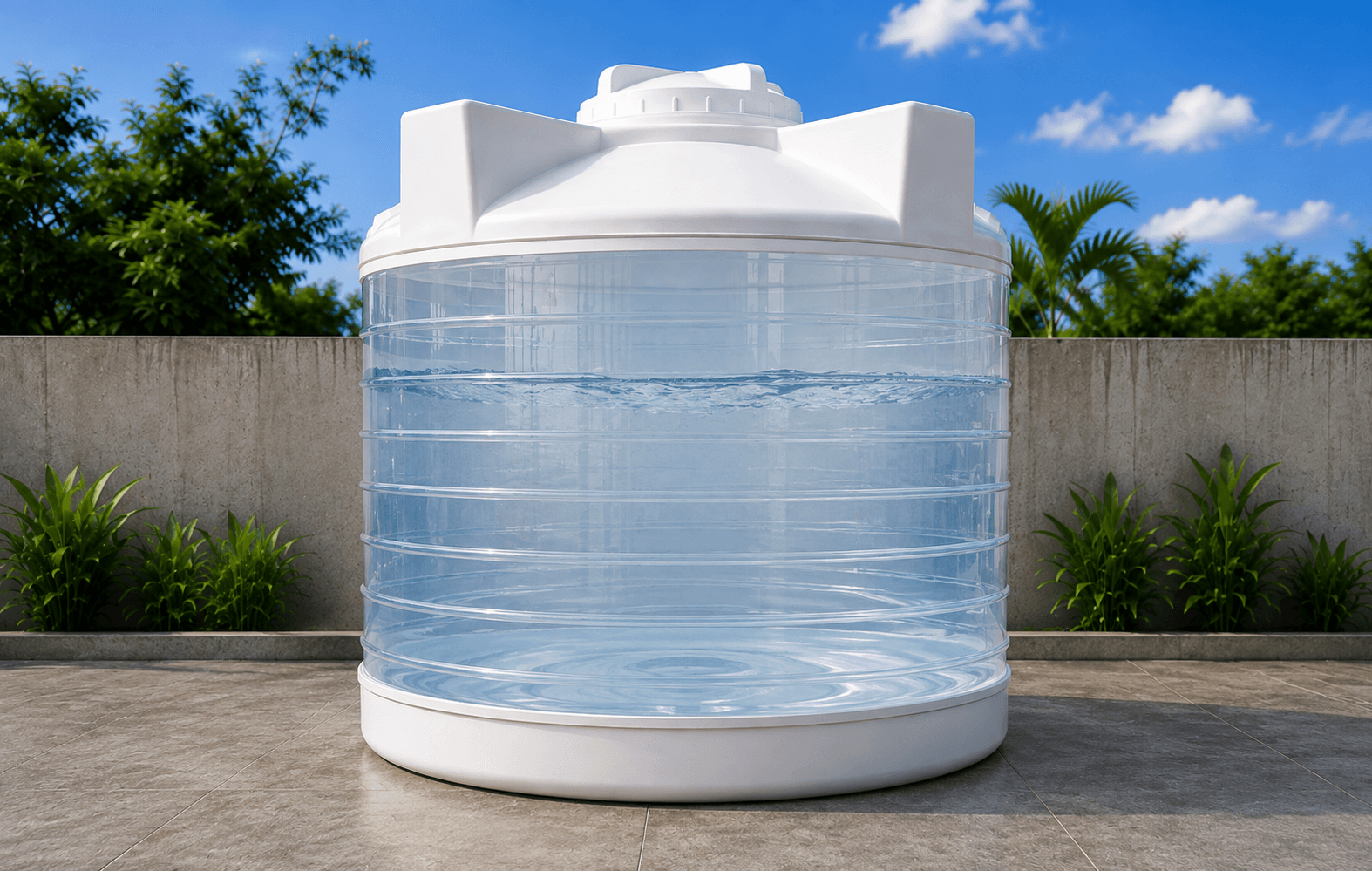
There are two jobs here and they are usually confused with each other. Getting the sand out of your tank is a cleaning job. Keeping it out is a filtration job. Do the first without the second and you will be back on the roof in a few months.
Part one: clearing what is already in there
You will need a couple of hours and a dry day.
Shut the inlet. Close the valve feeding the tank, then run taps in the house to draw the level down. Do not drain it completely yet.
Stop before you hit the bottom. Leave roughly ankle-deep water. This is deliberate. That last layer keeps the settled sediment suspended enough to sweep out, instead of drying into a crust you have to scrape.
Sweep, do not scrub. Use a soft brush or a clean cloth and push the sediment toward the outlet or drain hole. Hard scrubbing on a plastic tank leaves micro-scratches, and those give future deposits something to grip.
Flush and repeat. Open the inlet briefly to add a few inches of clean water, sweep again, drain again. Two or three passes usually runs clear.
Skip the bleach unless you have a reason. If you are dealing with grit and silt, water and a brush is enough. Disinfection is a separate job with a separate reason, and residual chlorine in a tank you are about to bathe from is not free of downsides.
Check the lid before you leave. A cracked or badly seated tank lid lets in dust, leaves and insects continuously. It is the single most common reason a freshly cleaned tank goes dirty again quickly, and it costs nothing to fix.
Part two: stopping it coming back
If sand is arriving with your supply, cleaning alone is a treadmill. You need something physical between the incoming water and the tank.
Where the filter goes
At the inlet, before the water enters the tank. Not at a tap, not under the sink. The point is to keep sediment out of the tank in the first place, so it never settles into a layer.
Most homes do this with a 20 inch Big Blue housing, which is a standard, widely available size in India. The housing plumbs into the inlet line and holds a replaceable cartridge or a washable filter bag.
Choosing a micron rating
The micron number is the size of particle the filter will stop. Smaller number means finer filtration.
| Rating | Catches | Trade-off |
|---|---|---|
| 20 micron | Coarse sand, larger grit | Long life, misses fine silt |
| 5 micron | Sand, silt, mud, rust flakes | Good balance for tank supply |
| 1 micron | Very fine particles | Clogs fast on dirty supply, drops flow |
For typical borewell or municipal supply carrying sand and monsoon silt, 5 micron is the sensible default. It catches what you can see and most of what you cannot, without choking flow to a trickle or needing cleaning every week.
Going finer than your problem requires is a common and expensive mistake. A 1 micron filter on sandy water clogs quickly, and a clogged filter drops your pressure until you deal with it.
Cartridge or washable bag
A disposable cartridge is thrown away when it loads up. A washable filter bag is rinsed out and put back.
On sandy supply, the difference matters. Sediment is exactly the kind of load that rinses off easily, so a reusable bag handles it well and you are not buying cartridges through every monsoon.
The maintenance rhythm
Filters are not fit-and-forget. The honest cycle looks like this:
- Check the filter when flow drops. That is the signal, more reliable than any calendar. A loaded filter restricts flow before it fails.
- Rinse or replace it. With a washable bag, rinse until the water runs clear and refit it.
- Clean the tank once or twice a year. Even good filtration passes some fines. Twice a year if you are on borewell supply or see heavy monsoon silt, once if your supply is generally clean.
- Clean the tank after any supply disruption. Pipe repairs and line breaks push a slug of debris through the system.
What this will not fix
Be clear-eyed about scope. Inlet sediment filtration handles suspended solids: sand, silt, mud, rust particles.
It does not touch bacteria, hardness, dissolved iron, or anything dissolved rather than suspended. If your water is discoloured but nothing settles out when you leave a glass standing, the problem is dissolved and this is the wrong tool. Get it tested before buying anything.
It also sits upstream of your household plumbing, so it cannot catch rust forming inside your own pipes downstream of the tank. There is more on telling those apart in why your tank water turns muddy after it rains.