Sediment filter vs RO: which one do you actually need?
They solve completely different problems, and buying the wrong one is expensive. A simple glass test tells you which you have in under ten minutes.
illegalsoup4 min read
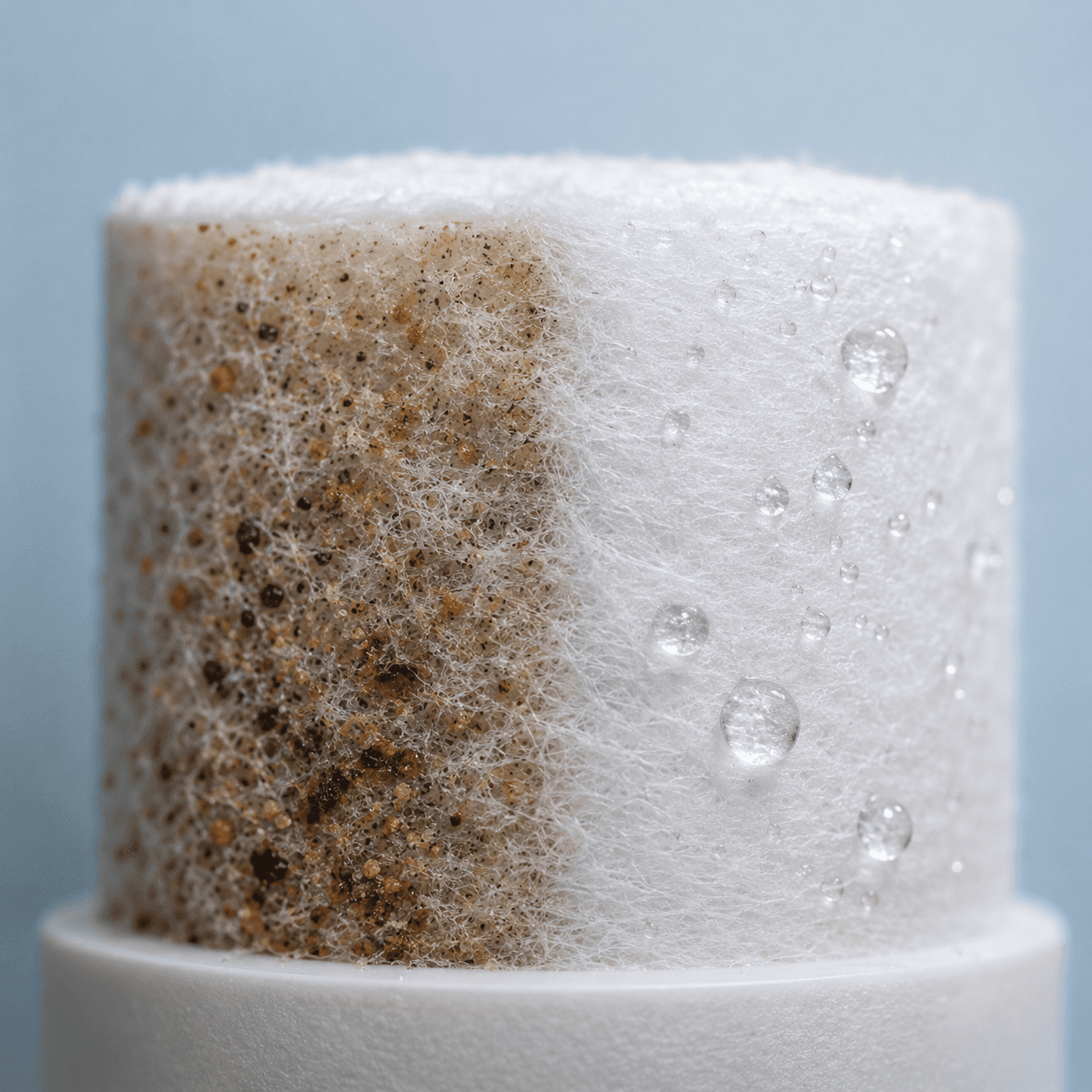
People buy an RO unit to fix muddy water and are surprised when it does not help, or when it stops working within weeks. The reason is simple: these two devices are not competitors. They remove different categories of thing, and one is designed to sit behind the other.
The core difference in one line
A sediment filter strains out what is floating in your water. RO removes what is dissolved in it.
Everything else follows from that.
What a sediment filter does
It is a physical barrier. Water passes through a fine mesh or fabric, and anything larger than the rated pore size cannot follow.
So it catches:
- Sand and grit
- Silt and clay, the fine material that makes water look brown after rain
- Mud
- Rust flakes broken loose from pipes
It is rated in microns. A 5 micron filter stops particles down to roughly 5 micrometres. It is mechanical, straightforward, and easy to verify: pull it out after a month on dirty supply and you can see exactly what it caught.
What it does not do is anything dissolved. Salts, hardness, dissolved iron, fluoride, most chemical contamination, bacteria and viruses pass straight through, because none of them are particles a mesh can catch.
What RO does
Reverse osmosis pushes water through a semi-permeable membrane under pressure. The pores are far smaller than any sediment filter, small enough to exclude dissolved ions.
So it addresses:
- Dissolved solids, which is what a TDS reading measures
- Hardness
- Many dissolved chemical contaminants
- Salinity
It is the right tool when your problem is taste, TDS, or dissolved contamination, and it is normally installed at a single point of use such as a kitchen tap, not for the whole house.
Why RO needs a sediment filter in front of it
This is the part that costs people money.
An RO membrane is fine enough to reject dissolved ions, which also means it blocks easily. Send sandy, silty water into it directly and the membrane fouls. You lose flow, the unit runs longer to produce the same output, and you replace an expensive membrane far sooner than you should.
That is why a properly specified RO system always has pre-filtration ahead of it. The usual order is:
- Sediment filter, removing grit so later stages are not overwhelmed
- Carbon filter, removing chlorine, which damages the RO membrane
- RO membrane, doing the job it is actually for
Skipping stage one does not save money. It moves the cost onto the most expensive component in the chain.
Which do you have? The glass test
Fill a clear glass from your tap and leave it standing for ten minutes.
| What you see | What it is | What you need |
|---|---|---|
| Particles settle, water above clears | Suspended solids | Sediment filter |
| Colour stays uniform, nothing settles | Dissolved | Water test, then likely RO |
| Settles, grit is orange or red | Rust from your pipes | Plumbing, plus point-of-use filtration |
| Clear water, but tastes salty or bitter | Dissolved solids | RO |
The test is crude, but it splits the two categories reliably, and that is the actual decision you are making.
The honest summary
If your water looks dirty, you have a sediment problem. Filter it at the tank inlet. An RO unit will not fix visible mud, and feeding it mud will wreck it.
If your water looks clean but tastes wrong, or your TDS is high, you have a dissolved problem. That is RO territory, and it belongs at a drinking-water tap rather than on the whole house.
If you have both, do them in order: sediment at the tank inlet, RO at the kitchen tap. They are complementary, not alternatives.
For the sediment half, how to get sand and silt out of an overhead water tank covers installation and the micron choice in detail.
One thing worth saying plainly
If nothing settles in the glass and you cannot identify the problem, do not guess and do not buy either device yet. Discoloured water with nothing suspended in it can mean dissolved iron, organic matter, or contamination that needs identifying rather than filtering. A water test costs far less than the wrong appliance.